

I have a lot of birds in the garden. Mostly finches and chickadees, but also a pair of doves, some raucous blue jays, sparrows, and the occasional nuthatch. Just yesterday a group of three flickers were happily aerating the back lawn for me. Recently I had a new family hanging out, a family of hawks. Now, I have to admit that I’m not 100% clear what kind of hawk they are. I have it narrowed down to either Cooper’s hawks or sharp shinned hawks – word is that they are difficult to tell apart and I am certainly no expert. Regardless of species, I think you’ll agree that it is somewhat cool to have a family of hawks hanging out in your back garden.
But here’s the thing about Nature: just when you’re thinking about how cool it all is you’re reminded that it can also be unpleasantly messy. That’s right, this group of hawks was treating my bird feeders as an all-you-can-eat buffet. I’m quite fond of my assorted birds. I’m even fonder of them alive rather than shredded under the talons of a bird of prey. I quickly went from, “this is cool,” to freaking out that I was endangering my smaller feathered visitors.
What to do?
A quick stroll across the internet led to a handful of suggestions, first and foremost of which was to remove the bird feeders for a few days. The hawks would move on, they said, though they might come back as soon as the feeders (and feathered entrees) returned. I gave it a try, but here’s the deal: first off, the chickadees got a bit shirty about it and then also no-one moved on because the garden is a tasty buffet in late summer. There are lots of sunflowers, chokecherries that didn’t get made into jelly, and insects galore. In the end I just let nature take its course. There was the odd untimely demise but the birds seemed to adapt to the threat and eventually the hawks moved on anyway.

Black-capped chickadee. 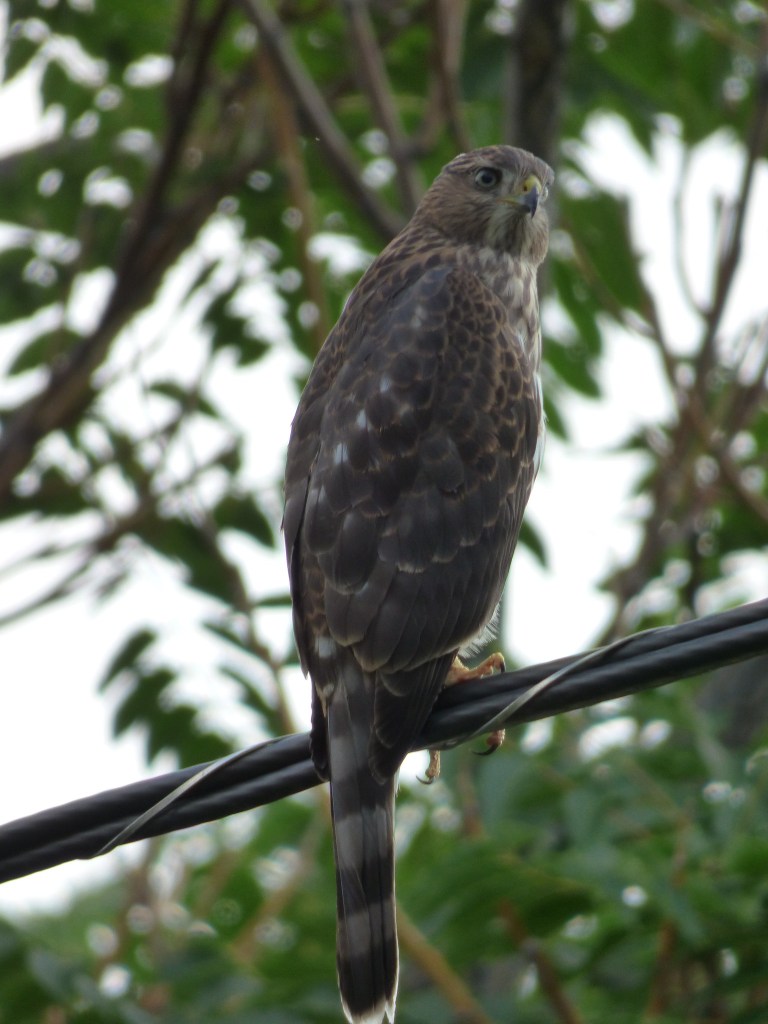
One of the hawks. 
House finch on the lookout. 
Pair of hawks drying out after a thunderstorm.
All photos by author unless otherwise stated.
 My Messy Garden